Ecuadorian Highland Cuisine You Must Try
Exploring the culinary landscape around Cascada de Peguche and the broader Imbabura province provides a direct link to Ecuador’s agrarian history. At an elevation of roughly 2,500 meters (8,200 feet), the crisp Andean air carries the distinct scents of woodsmoke, slow-roasting pork, and spiced corn boiling in large clay pots. Dining in the northern highlands bypasses formal, white-tablecloth restaurant settings in favor of communal, dynamic environments. The most authentic meals unfold at bustling market stalls, humble roadside griddles near the waterfall entrance, and multi-generational family eateries that have perfected their specific cooking techniques over several decades.
To taste traditional Ecuadorian highland cuisine is to experience the enduring agricultural heritage of the indigenous Kichwa people mixed with centuries-old mestizo cooking methods. The dishes are unapologetically hearty. They evolved to fuel long days of farming on steep volcanic slopes and hiking through dense cloud forests. For more insight into these community traditions, explore our guide on Kichwa Culture & The Inti Raymi Festival or consult the official Ecuador Travel portal for broader national food heritage. From ceremonial fermented beverages deeply rooted in ancestral rituals to globally recognized roasted meats prepared in heavy brass pans, the local food scene offers a precise, verifiable, and incredibly delicious gateway into the realities of Andean culture.
Trailside Bites & Highland Starters
Before or after hiking the trails of the protected forest, visitors traversing the main pathways near the Cascada de Peguche entrance will encounter vendors serving quintessential llapingachos. Unlike standard potato cakes, these patties rely on native Andean potatoes boiled, mashed, and stuffed with unaged fresh cheese. Vendors sear them on heavy iron griddles until the exterior forms a crisp, golden-brown crust. They are then generously smothered in salsa de maní—a rich, savory peanut sauce—and traditionally plated alongside local chorizo, a fried egg, and thick slices of ripe avocado. This combination creates the perfect, energy-dense fuel for trekking the nearby trails.
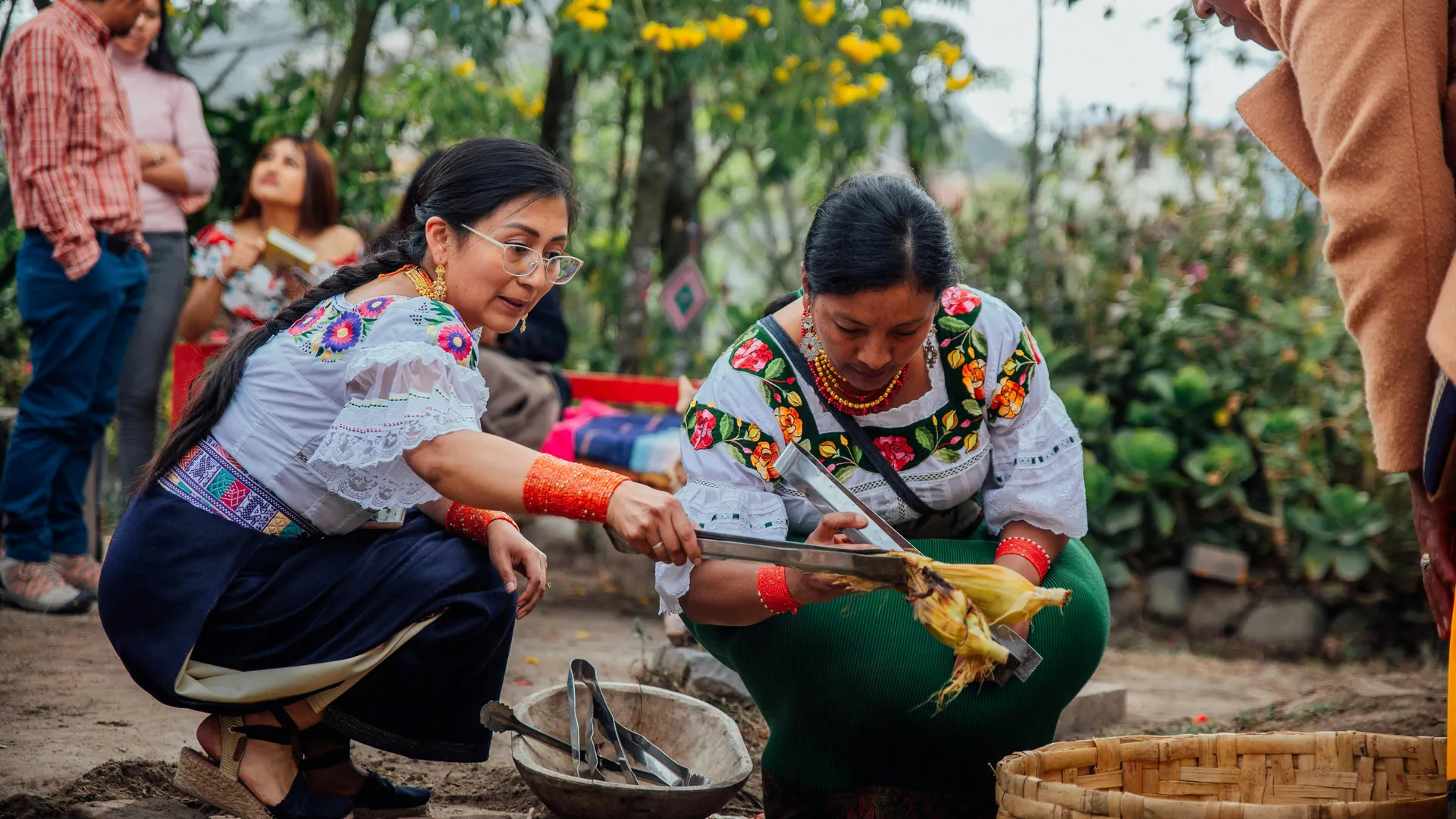
Adjacent stalls frequently offer choclo con queso fresco. This simple dish utilizes massive, meaty Andean heirloom corn kernels. These kernels boast a much lower sugar content and a denser, starchier texture than North American sweet corn, making them an ideal pairing for salty, unaged local cheese. For those craving a sweeter start, empanadas de viento (wind empanadas) are a classic pairing at local Otavalo food stalls. These massive, deep-fried pastries contain a tiny hint of cheese and puff up dramatically in the hot oil before being dusted with sugar. Culturally, locals pair these empanadas with morocho, a thick, porridge-like beverage made from cracked white Andean heirloom corn (maíz desaguado) slow-cooked with milk, cinnamon, and raisins.
Another universally beloved starter is Locro de Papa, a thick, warming potato soup colored with achiote and enriched with cheese. According to the Slow Food Foundation, the Andes are home to thousands of native potato varieties, making this simple bowl of soup a complex celebration of regional biodiversity and agricultural history. Travelers taking a private tour combining the Otavalo Market, Cuicocha Lake, and the Peguche waterfall will often stop at local haciendas to sample this specific soup, served with a side of toasted corn nuts (tostado) and fresh avocado slices.
Hearty Mains & Fire-Roasted Classics
As you venture into nearby towns or follow a 7-Day Imbabura Itinerary, you will inevitably encounter the heavyweights of Andean cuisine: Fritada and Hornado. As of 2025 and 2026, the bustling Mercado 24 de Mayo in central Otavalo remains a mandatory culinary focal point. Inside, multi-generational food stalls operate at full capacity. Many dedicated vendors serve massive plates of slow-cooked pork fritada accompanied by hominy. In the northern highlands, cooks prepare this dish in a massive paila de bronce (bronze pan). They boil chunks of pork in a mixture of water, cumin, garlic, and achiote. Once the water completely evaporates, the pork begins to fry in its own naturally rendered fat, resulting in a tender interior and a highly caramelized exterior.
Imbabura province famously won the title of “Mejor Hornado del Mundo” (Best Hornado in the World). This legacy was cemented during the 2014 national culinary championship by local chef Rosario Tabango and is thoroughly documented by the Ecuadorian Ministry of Tourism. In the Otavalo and Peguche area, Hornado Imbabureño emphasizes the cascarita (crackling pork skin). Vendors traditionally use mature pigs, often 2 to 4 years of age, to prepare this massive feast. The meat is marinated for a full 24 hours in a proprietary blend of local spices before roasting in a traditional wood-fired oven. It is famously served with mote (hominy corn) and agrio, a tangy, slightly sweet pickled onion and tomato sauce.
For the highly adventurous eater, Cuy asado (roasted guinea pig) is a regional delicacy with deep pre-Columbian roots. In the Imbabura highlands, especially in nearby agricultural parishes like Chaltura and Natabuela, cooks utilize an ancestral technique where the meat is skewered on a palo de cerote (cerote wood stick) and slow-roasted over a charcoal fire. This method ensures an even cook and a smoky flavor profile that cannot be replicated in a standard kitchen oven.
Ancestral Techniques & Traditional Beverages
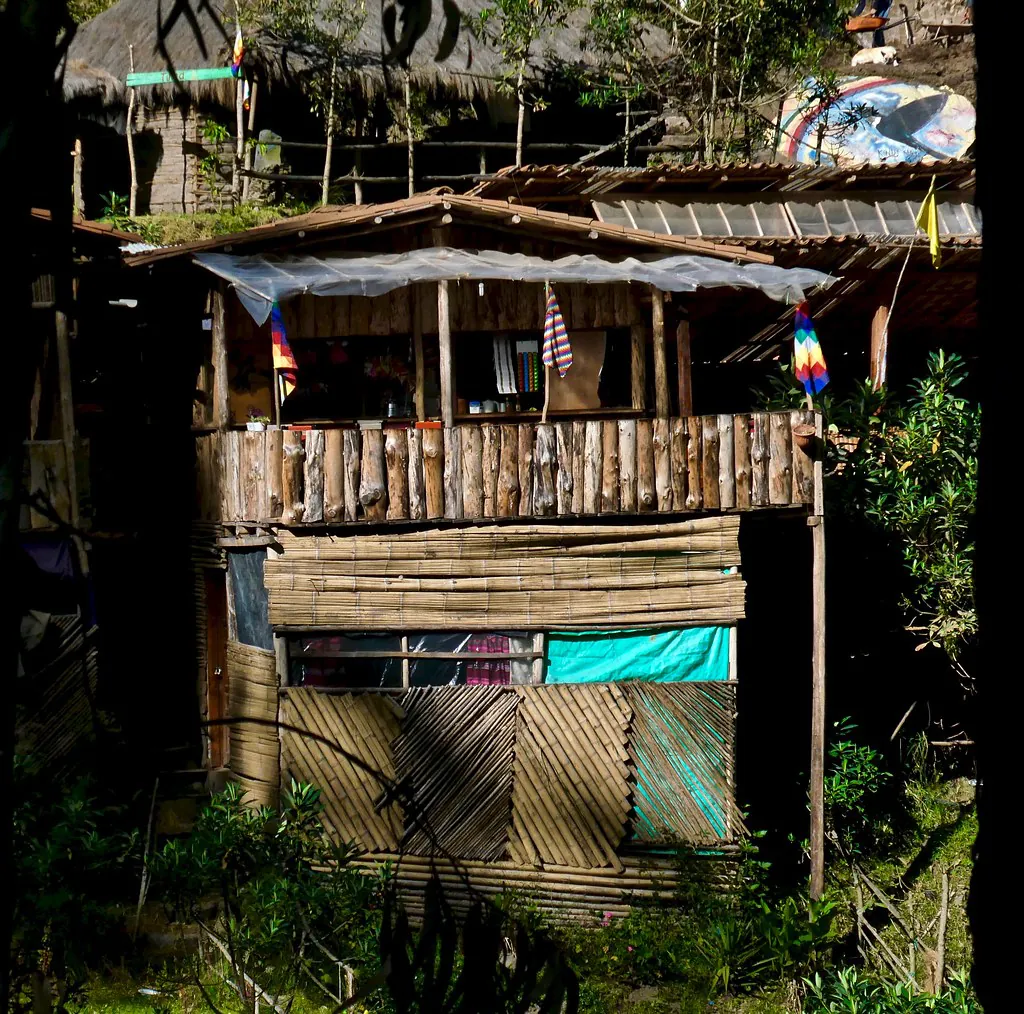
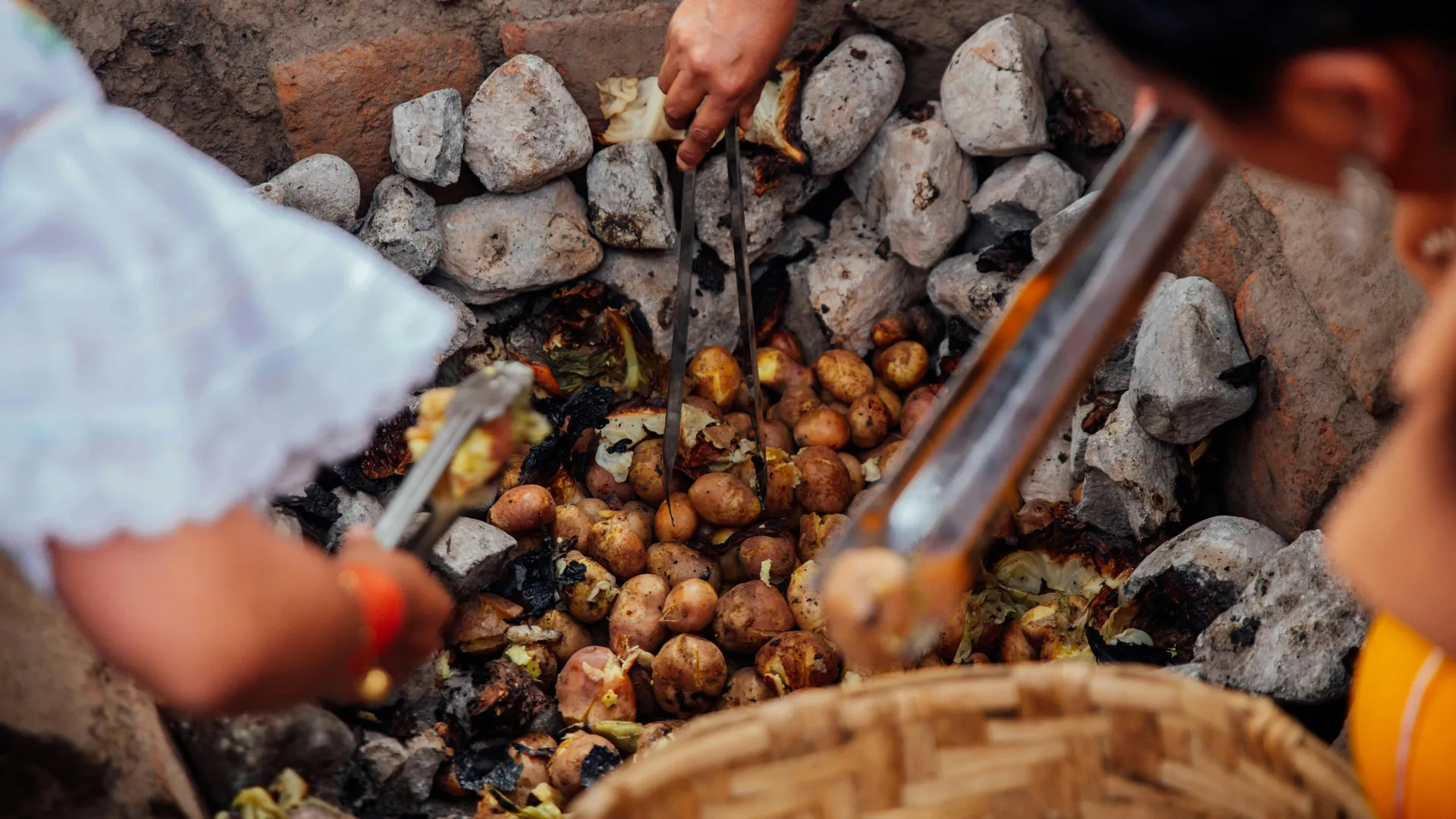
Beyond standard cooking methods, many indigenous communities actively preserve ancestral techniques that emphasize a profound connection to the earth. The renowned Hostal Aya Huma in Peguche features a rustic restaurant that prepares the Pachamanca—a traditional pre-Hispanic feast. This technique involves cooking meats, native potatoes, and fava beans underground using heavily heated volcanic stones and earth. The process effectively turns the ground itself into an oven, steaming the ingredients slowly and infusing them with an earthy, mineral-rich flavor. Native superfoods like quinoa and amaranth, highly praised for their nutritional density by the Food and Agriculture Organization (FAO), are frequently incorporated into these rustic, wholesome meals.
To drink, nothing compares to the historical significance of authentic Chicha de Jora. The traditional Kichwa preparation begins with a highly specific 14-day germination process. Heirloom corn kernels are wrapped tightly in large tanampu leaves and buried in the earth to sprout into what locals call hura (the Kichwa root of the word jora). Once sprouted, the corn flour is boiled with panela (unrefined cane sugar) and sealed in traditional clay pots (vasijas de barro) to ferment naturally over several days. The resulting beverage is mildly alcoholic, offering a slightly sour, earthy flavor that cuts through the richness of the savory highland pork dishes. Travelers extending their stay with a guided Otavalo adventure focusing on Kichwa culture frequently have the opportunity to observe this labor-intensive fermentation process firsthand.
For a non-alcoholic energy boost, the current Otavalo food markets feature a unique, highly nutritious Andean shake known as a batido. At stalls like “Deleite y Sabor” (Stall 145), vendors blend fresh alfalfa, tart tree tomato (tomate de árbol), and a raw quail egg (huevo de codorniz). Notably, the egg is tossed into the blender entirely whole, with the shell included, to provide a massive dose of raw calcium and protein favored by local manual laborers.
Traveler Advice & Pro Tips
Sampling street food and local delicacies is one of the most effective ways to experience northern Ecuador, but a few practical tips will ensure your culinary exploration is both safe and physically comfortable. For more general regional advice regarding logistics and personal security, be sure to read our dedicated guide on safety in Northern Ecuador.
- Eat where the locals eat: High turnover equates to fresh food. If a specific stall inside Mercado 24 de Mayo or a roadside griddle near the waterfall has a long line of local residents, it is statistically a very safe and delicious bet.
- Mind the altitude: Digestion slows down significantly at higher elevations. Because the Imbabura region sits at roughly 2,500 meters (8,200 feet), your body requires more energy to process heavy fats. Plan to consume your heaviest meals—like Fritada or Hornado—at lunch rather than late at night.
- Carry small change: Most roadside stalls near the Peguche waterfalls and multi-generational vendors in the bustling markets operate on a cash-only basis. They rarely accept credit cards or large denominations. Carry a sufficient supply of $1, $5, and $10 bills, as well as local coin currency.
- Stay hydrated: Drink exclusively bottled or purified water. To aid in digestion and altitude acclimatization, enjoy local herbal infusions such as sunfo tea, which are widely available in highland cafes.
“The true flavor of the Andes is found not in white-tablecloth restaurants, but in the bustling markets and humble roadside griddles where specific, verifiable recipes have been perfected over generations.”