The Sacred Geography and Spiritual Foundation of Fakcha Llakta
Water as a Living Entity and Community Caretakers
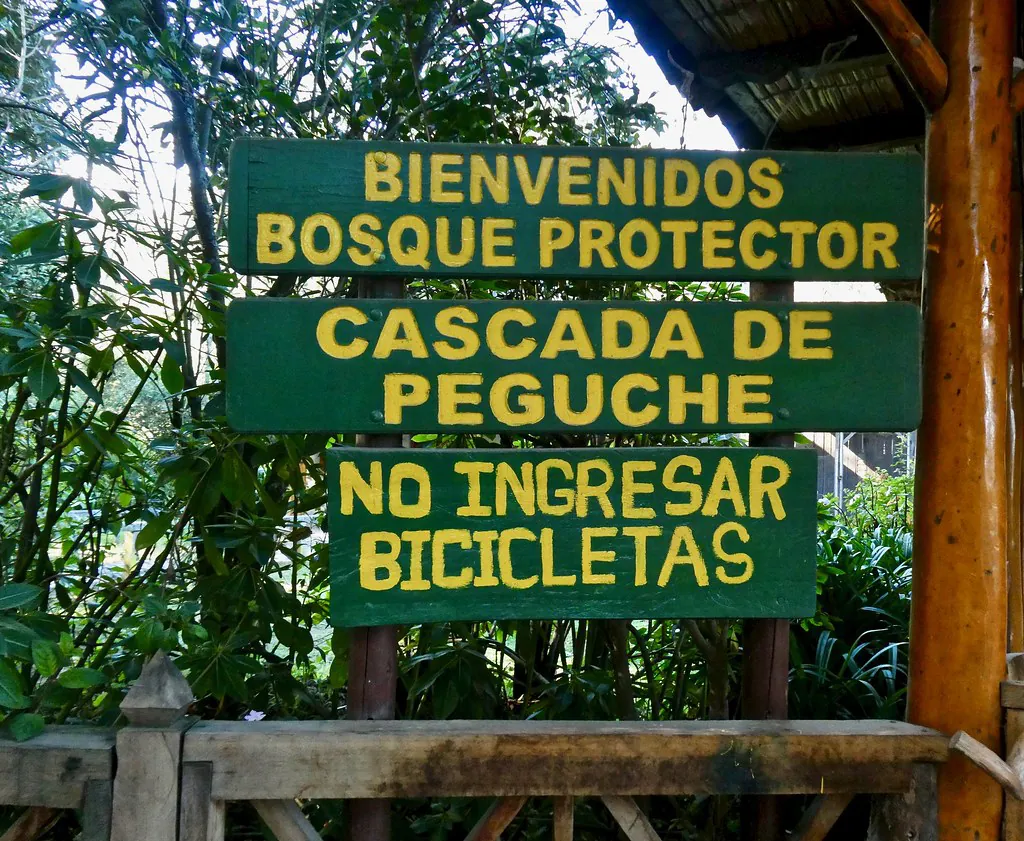
The indigenous Kichwa belief system dictates that rivers, subterranean springs, and the Peguche Waterfall operate as living, energetic entities rather than mere natural resources. These flowing waters provide necessary purification and life to the surrounding highlands. The 40-hectare protected forest encasing the falls is independently managed by the 88 families of the indigenous Kichwa community known as Fakcha Llakta. Under the leadership of President Freddy Panamá for the 2025 and 2026 calendar years, these ancestral caretakers work to preserve both the spiritual integrity and the physical environment of the site. The community views their stewardship as a sacred duty passed down through generations. Visitors can learn more about their specific ecological preservation efforts on the Conservation and Environment page.
In Andean cosmology, water acts as a conduit between the physical world and the spiritual realm. The cascading water generates a specific kinetic energy that local shamans and spiritual guides utilize during cleansing rituals. This energy is believed to recalibrate the human spirit, washing away accumulated fatigue and misfortune. Because the area operates as a functional spiritual site rather than a standard tourist attraction, maintaining the purity of the water remains the community’s highest priority.
Honoring Taita Inti and the June Harvest
The Inti Raymi festival functions as a profound expression of gratitude for the agricultural abundance yielded during the June harvest period. At the center of this celebration is a dual reverence for Taita Inti (the Sun God) and Pachamama (Mother Earth). The local culture builds its calendar around the direct relationship between the sun’s life-giving energy and the earth’s fertility. The official start of the solstice celebrations begins at the Inti Watana—the ancient indigenous solar calendar and sun dial located near the trail entrance—precisely at noon on June 21st, aligning with the sun’s highest zenith.
During these celebrations, the festival’s spiritual guide wears a brightly colored, two-faced mask known as the Aya Huma (often referred to as Diabluma). In the Kichwa language, “Aya” signifies the energy and power of nature, while “Huma” translates to head or leader. The two faces on the mask carry deep cosmic significance. They allow the dancer to look into the past and future simultaneously, ensuring they never turn their back on Taita Inti. The global importance of these highland traditions is formally recognized by the Imbabura UNESCO Global Geopark, which categorizes the region’s cultural heritage as vital to the Andean identity.
The waterfall does not just wash the body; it resets the spirit. During Inti Raymi, we return to the water to leave behind the weight of the old year and embrace the energy of the new sun.
Traditional Kichwa Belief, Fakcha Llakta Community
The Armay Tuta Midnight Ritual and Purification Ceremonies
The most crucial and intensely spiritual moment of the Inti Raymi festival is the Armay Tuta, or Night Bath. This purification ritual takes place exactly at midnight during the transition between June 22nd and June 23rd. The precise timing is not arbitrary. Kichwa spiritual leaders identify this specific astronomical transition as the most potent moment for cleansing, where the veil between the physical and spiritual worlds is thinnest. The objective of the ritual is twofold: shedding negative energy accumulated over the past twelve months and absorbing the powerful, restorative energy of the flowing mountain water.
Historically, the entire community would bathe directly beneath the primary cascade of Peguche. However, modern realities have required sustainable adaptations to these ancient traditions. During the core days of Inti Raymi (June 20-23), the Fakcha Llakta community logistics team prepares the forest trails and camping areas to receive a massive influx of between 15,000 and 18,000 domestic and international visitors. In 2025, to protect the main cascade’s delicate ecosystem and water quality from overwhelming crowds, the community officially habilitated four alternative sacred springs, known as pukyus, hidden within the eucalyptus forest. These newly blessed locations, which include the “Ojo del Poder” and the “Piscina Incaica”, allow the community to disperse the ritual baths while maintaining the spiritual integrity of the water.
Participating in or observing the Armay Tuta requires strict adherence to local customs. The paths leading to the sacred springs are dark, and navigation requires careful planning. Travelers hoping to witness these nocturnal ceremonies should study the Trail Map and Hiking Guide in advance. Because the forest is an active ceremonial ground, all guests must strictly follow the Visitor Rules and Guidelines, which mandate respectful silence and prohibit disruptive flash photography during the midnight hours. The official documentation of these cultural events is heavily supported by the Ecuador Ministry of Tourism and local heritage platforms like GoRaymi, both of which emphasize the necessity of preserving indigenous dignity during high-traffic tourism seasons.
For visitors who wish to deeply understand the spiritual context of the region without navigating the midnight crowds independently, professional cultural excursions offer a highly structured alternative. Booking a guided Otavalo Kichwa culture tour ensures that you receive accurate historical context from indigenous guides while respecting the strict logistical boundaries set by the Fakcha Llakta leaders. Information on other local excursions and entry donations can be found on the Tickets and Tours page.
Inti Raymi Logistical Timeline & Key Events
| Date | Event | Location | Visitor Guidelines |
|---|---|---|---|
| June 21 | Inti Watana (Solstice Ceremony) | Fakcha Llakta Plaza | Respectful observation, photography permitted with permission |
| June 22 (Midnight) | Armay Tuta (Night Bath) | Peguche Waterfall & Sacred Springs | Strict silence required, spiritual participation only |
| June 23 – 24 | Toma de la Plaza (Dances) | Otavalo & Surrounding Villages | High crowds; plan transport ahead using the transport guide |
| Late June | Community Harvest Feasts | Local Workshops & Villages | Support local weavers via the artisan workshops |
Preserving Ancient Traditions Today
The preservation of Inti Raymi relies heavily on physical, rhythmic expressions of gratitude. The most prominent of these is the Zapateo, a forceful, rhythmic earth-stomping dance. In Andean cosmology, the literal purpose of this aggressive footwork is to “wake up” Pachamama so she can properly receive the community’s gratitude for the June harvest. As dancers move through the forest trails, they shout Kichwa phrases like “churay! churay!” (dance/stomp!) and “kulun! kulun!” to inspire a frenzied, unified rhythm. To amplify the sonic impact of the Zapateo, male dancers wear heavy, traditional sheepskin chaps known as Zamarros. These garments are intentionally adorned with small bronze and copper bells that ring loudly with every synchronized stomp, a practice historically designed to ward off supay (negative spirits) from the sacred sites.
The hypnotic music echoing through the eucalyptus forest during the solstice is generated by a vibrant mix of traditional Andean wind and string instruments. The primary melodies are carried by the pingullo, a small, high-pitched Andean flute, and the rondador, a unique Ecuadorian panpipe constructed from varying lengths of native cane, while the driving rhythmic foundation is provided by the guitar and the bandolín, a 15-stringed Ecuadorian instrument. This acoustic tradition remains unbroken, deliberately eschewing modern amplification to maintain the forest’s natural acoustic resonance.
Following the intense purification baths and the exhausting physical exertion of the Zapateo, the community gathers to partake in a massive feast known as the Pampamesa, which translates to “food for all.” To foster a direct physical connection with the earth, a long strip of woven cloth or traditional ponchos is laid directly on the soil. This communal table is piled high with traditional Sierran staples harvested locally, including mote (hominy), potatoes, fava beans, and roasted pork. The primary ceremonial beverage accompanying the feast is Chicha de Jora, a sacred fermented corn drink stored in heavy earthen clay pots. Before any individual takes their first sip during the Inti Raymi rituals at Peguche, the first drops are intentionally spilled onto the soil as a direct, liquid offering to Pachamama.
While the waterfall is the focal point of the purification, the surrounding Peguche geography is dotted with multiple Wakak, or sacred energy vortexes and shrines. The most prominent nearby Wakak is “El Lechero,” a revered 300-year-old tree located on the summit of the Loma de Pucará Rey hill overlooking Lago San Pablo. Here, away from the dense crowds of the waterfall, local families perform the intimate wakcha karay (food offering) ritual. Understanding the interconnectedness of these shrines, the harvest, and the water is essential to grasping the full scope of indigenous Andean beliefs. Readers who wish to explore the broader historical timeline and deeper cosmology of the sun festival can find comprehensive details in our dedicated guide: Understanding the Andean Inti Raymi Traditions.